

"Thank you so much for the beautiful reading. I have listened to the recording a number of times, and each time I do, I hear something different, or something else drops a level in my understanding. I was so inspired by your knowledge and clarity that I have signed up to study with you on your philosophy course.” - Fiona C

Writing
Long ago (it feels like a few lifetimes . . .) when I used to teach writing, a colleague of mine would always include a certain line in his introductory class. “How do I know what I think until I read what I wrote?” Puzzled at first, most students soon could understand his point. For it is indeed true that until confronted with the challenge of written expression, most thinking is rather woolly.
Writing about yoga is a particularly daunting task. How do you put into language that which is beyond words?? How do you present in a linear manner (word by word) that which transcends dimension???
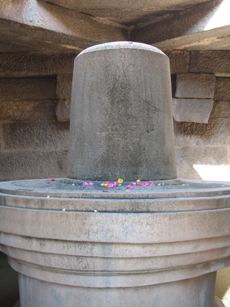 What follows on these pages are some of my attempts. The articles contain my thoughts on certain topics at specific points in time. They are no more stable than anything else belonging to the flux of experience.
But I do believe these exercises are an important part of yoga practice. Svadhyaya (study) belongs to the tradition of classical Ashtanga Yoga (fourth niyama according to Patanjali). It is also one of the three pillars of Kriya Yoga.
In the Bhagavad Gita, Krishna says, “When you are unmoved by the confusion of ideas and your mind is completely united in deep samadhi, you will attain the state of perfect yoga.” Study and writing--when informed by the fire of practice--can serve as powerful tools towards the advancement of true understanding, unravelling confusion into clarity. Indeed, they can be a form of practice in themselves. Such is the case in my own practice (though I certainly realise that all people are not so inclined).
Blood Memories is a novel I wrote in the late Nineties. Through the medium of fiction, it explores themes of spiritual awakening through the lives of four generations of Italian-American women. If you want a good long page-turner for a beach holiday or long-haul flight, it could be just the thing!
Om Shanti


Om Namah Sivaya
Book a Reading
Reflections on Time September 2026
My latest predictions
The dark quadrant of the year begins with opportunity. On 26 September, just days after the equinox, Pitru Paksha commences, the fortnight of the ancestors. It’s a most sacred period in the Indian calendar. From Full Moon to New Moon, the night sky is progressively darker. With the autumnal equinox just crossed, the darkest period of Dakshinayana has also begun, with nights longer than days. Celebrated always in . . . (continue reading on blog)